# The One Wish Willow and the Ancient Art of Spells: From Horror Fiction to Living Magic
Introduction
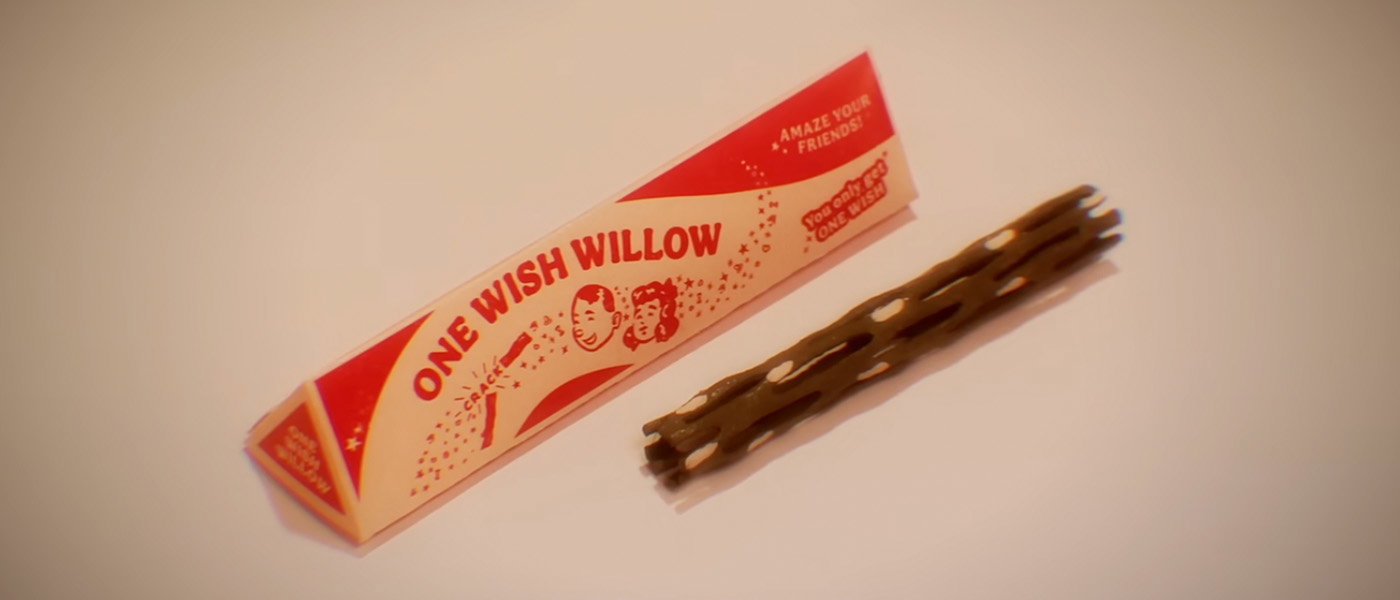
When the horror film Obsession was released in the spring of 2026, audiences found themselves captivated by more than its unsettling story. Much of the attention centered on an ordinary-looking object featured throughout the film: the One Wish Willow. Packaged like an inexpensive novelty item, the simple willow branch promised a single, irreversible wish when snapped in half. Although entirely fictional, it quickly became a cultural phenomenon, with many viewers eager to own a replica.In the film, Bear uses the One Wish Willow to wish that his childhood friend Nikki would love him "more than anyone else in the world." His wish is granted, but not in the way he expects. Nikki's affection becomes obsessive and destructive, consuming her identity and transforming genuine love into something frightening. Rather than creating obstacles on the path to the wish, the willow fulfills it exactly as spoken, exposing the danger of careless wording and unintended consequences. Part of what made the One Wish Willow so compelling was the way it blurred the boundary between fiction and reality. The filmmakers supported the release with an immersive marketing campaign that included a functioning website, vintage-style packaging, fabricated customer reviews, and even a customer support hotline that answered calls. Fans purchased replicas, social media creators produced skits based on the object, and The Green Man, a metaphysical shop in Burbank, California, became closely associated with the phenomenon. Beyond its success as a marketing concept, the One Wish Willow raises a broader question. Although the object itself is fictional, many cultures have long traditions involving wish-making, sacred trees, and magical practices. This leads naturally to an intriguing question: what, if anything, in the real world most closely resembles the One Wish Willow?
The Closest Real-World Parallels to the One Wish Willow
The fictional One Wish Willow draws on ideas that have existed in folklore and literature for centuries. Although no real object functions exactly as it does in Obsession, several traditions come remarkably close, particularly stories about dangerous wishes and the longstanding belief that certain trees possess spiritual significance.
The Monkey's Paw
The closest literary predecessor is W.W. Jacobs' 1902 short story The Monkey's Paw, one of the most influential cautionary tales ever written about wishes. In the story, a preserved monkey's paw grants three wishes, but every wish comes at a terrible cost. When a family wishes for money, they receive it only after their son dies in a tragic accident, and the payment arrives as compensation for his death. Director Curry Barker has acknowledged that a Treehouse of Horror episode from The Simpsons, itself a parody of The Monkey's Paw, helped inspire the One Wish Willow. Despite their similarities, the two objects work differently. The Monkey's Paw twists the events that lead to the wish being fulfilled, whereas the One Wish Willow grants the wish exactly as it is spoken. Its danger lies in its literal interpretation of language rather than in manipulating the path toward the desired outcome.
Wishing Trees
Outside fiction, wishing trees provide one of the closest folkloric comparisons. Across many cultures, trees have long been viewed as places where the human and spiritual worlds meet. They are treated as living beings capable of receiving prayers, intentions, and offerings. In Celtic tradition, people tied ribbons, coins, or other small objects to the branches of wishing trees while making a request, believing that the spirit of the tree would carry the wish to the divine. Similar traditions appear elsewhere. Taoist practice includes the idea of "money trees," while Japanese folklore connects wishes to sacred trees through the story of Oriimec and Hikoboshi. Among these trees, the willow occupies a particularly important place. Often called the "Tree of Enchantment" in magical traditions, it is associated with the Moon, water, femininity, healing, protection, and love. These symbolic connections have made it a recurring feature in folklore and magical practice for centuries.
Traditional Willow Wish Rituals
Several folk traditions describe specific ways of making wishes with living willow trees. Although these rituals differ by region, they share the belief that the willow should be approached with respect rather than treated as a tool. One well-known practice is the knot spell. A person selects a flexible branch on a living willow, ties a loose knot while speaking the wish aloud, and leaves it in place. If the wish is fulfilled, the individual returns, unties the knot, and leaves an offering as a gesture of gratitude. Another custom is performed during the full moon. Standing beneath the branches, the person blows a kiss toward the moon before quietly speaking the wish and tying a loose knot in one of the willow's shoots. Many traditions also stress the importance of asking the tree's permission before making a request. This reflects a belief that trees possess their own spirit or agency and deserve the same respect shown to any living being. These practices differ significantly from the One Wish Willow portrayed in Obsession. The fictional object works through a simple transaction: break the branch, make a wish, and accept the result. Traditional willow rituals instead emphasize an ongoing relationship built on respect, gratitude, and reciprocity. The tree is not simply a magical object but an active participant in the ritual.
The Willow in Folklore
Stories connecting willow trees to the supernatural appear in many parts of the world. In European folklore, willows were often associated with grief, heartbreak, death, and mysterious forces. One English legend even claimed that willow trees could pull themselves from the ground at night and silently pursue travelers. Japanese folklore likewise links willow trees with ghosts and wandering spirits, while in Chinese tradition they became symbols of mourning, death, and yin energy. Planting a willow too close to a home was sometimes believed to invite misfortune. The willow is also connected with the White Lady in European folklore and has long been associated with lunar deities and moon symbolism.
Modern Horror and Consumer Magic
The One Wish Willow also reflects contemporary horror in ways that older magical objects do not. Unlike the exotic Monkey's Paw, the willow is deliberately ordinary. It appears as an inexpensive product sold in familiar retail packaging, complete with indifferent customer service and commercial branding. This approach fits comfortably within the aesthetics of analog horror and creepypasta, where everyday objects become sources of unease. The fear comes not from an ancient relic hidden away in a forgotten temple but from something that looks as though it could have been purchased alongside household goods. The fictional marketing reinforces this idea. The One Wish Willow is presented as an inexpensive consumer product complete with rules, disclaimers, and limitations. Customers are told that wishes involving time travel, resurrection, immortality, or creating additional wishes are prohibited, turning supernatural power into something governed by terms and conditions. By combining ancient wish-making traditions with modern consumer culture, Obsession creates a magical object that feels strangely believable despite being entirely fictional.
Spells as a Living Tradition
Unlike the One Wish Willow, which presents magic as something that can be bought and used instantly, traditional spell craft has always been understood as a practice. Across cultures, spells are rooted in ritual, symbolism, and intention rather than in a single magical object. They reflect a worldview in which the physical and spiritual worlds are connected, allowing people to influence events through carefully performed acts.A spell is generally understood as a deliberate expression of intention carried out through words, gestures, symbolic materials, and, in many traditions, specific times or conditions. Variations of spellcasting have appeared throughout history, from the ritual texts of ancient Egypt to the folk charms of European cunning folk and the practices of modern Wiccan and neopagan communities. Although beliefs about how spells work differ widely, they share a common purpose: directing human intention toward a desired outcome. Some traditions explain this through the actions of gods or spirits, others through natural energies, and still others through the power of the mind and symbolism. Whatever the explanation, spellcasting is viewed as an active process rather than a simple transaction.
Willow in Magical Practice
The willow's symbolic associations with the Moon, water, intuition, healing, and transformation have made it an important element in many magical traditions. Willow wood has long been used to make wands intended for lunar rituals and other forms of magic connected with intuition and emotional energy. The tree also appears frequently in love magic, where its leaves may be carried or included in ritual mixtures intended to attract affection or strengthen emotional bonds. Its uses extend beyond love spells. Willow bark is included in protection and binding rituals, while branches or leaves may be placed on altars during divination or other forms of lunar magic. Some traditions describe burning crushed willow bark with sandalwood during the waning moon as part of ceremonies intended to communicate with spirits.
Different Forms of Spellcasting
Spell craft encompasses many different purposes, each reflecting particular beliefs and traditions. Love spells are among the best known, but they have also been the subject of the greatest ethical concern. This is the type of magic most closely reflected in Obsession. A traditional willow ritual intended to attract love does not focus on controlling another individual. Instead, the practitioner stands beside a willow, visualizes the qualities desired in a future partner, and asks the spirit of the tree to help bring the right person into their life. The emphasis is on inviting a compatible relationship rather than influencing the feelings of someone specific.Wishing rituals also make frequent use of the willow. Knot magic, in particular, remains one of the best-known examples. Rather than demanding immediate results, the ritual encourages patience, gratitude, and a continuing relationship with the natural world.Healing traditions provide another important connection. Willow bark contains salicin, the natural compound that eventually led to the development of aspirin. Because its medicinal effects were observable long before modern chemistry explained them, the tree became associated with both physical healing and magical restoration.Willow is also used in protective practices. Branches or bark may be kept in homes or places of business to guard against harmful influences, while its close association with the Moon has made it a familiar feature in rituals involving divination, intuition, and prophetic dreams.
Ethics and Responsibility
One of the clearest distinctions between the One Wish Willow and traditional spellcraft is the role of ethics.In Obsession, the willow is morally indifferent. It grants wishes exactly as they are spoken without offering guidance or considering whether the outcome will harm anyone. The responsibility rests entirely with the person making the wish.Many historical and modern magical traditions approach the subject differently. Ethical principles are often built into the practice itself. The Wiccan Rede, commonly summarized as "An it harm none, do what ye will," is one well-known example, though similar ideas appear in many other traditions. Practitioners are frequently warned against attempting to manipulate another person's thoughts, emotions, or choices, particularly through love spells, because doing so is considered a violation of free will.This ethical distinction helps explain why Bear's wish becomes so destructive. Rather than wishing to find love or create the opportunity for a healthy relationship, he attempts to determine Nikki's emotions directly. The One Wish Willow does exactly what it is asked to do, but without any moral framework to limit or question the request. The result is not a failure of the magic but a consequence of the wish itself.
Comparing the Two Approaches
The contrast between the One Wish Willow and traditional spellcraft extends beyond ethics.The willow in Obsession functions as a consumer product. It promises immediate results, requires little effort beyond making a wish, and offers no ongoing relationship between the user and the source of its power. Once the wish is made, the outcome cannot be reversed.Traditional spellcraft operates very differently. It emphasizes preparation, intention, ritual, and reciprocity. Practitioners are expected to develop a relationship with the natural or spiritual forces involved, and many rituals include offerings, expressions of gratitude, or acts of respect. Outcomes are often viewed as flexible rather than fixed, and many traditions include methods for reversing, correcting, or balancing magical work when necessary.Seen in this light, the One Wish Willow is less an example of traditional magic than a modern reinterpretation of it. It transforms practices built on patience, symbolism, and ethical responsibility into a simple commercial product, replacing a living tradition with an object that promises instant results while stripping away the guidance that traditionally accompanied such practices.